Lesson 158 carries a simple yet profound idea: “Today I learn to give as I receive.” The lesson teaches that what we truly give to others is not information, advice, or experiences, but a way of seeing: the vision of Christ. This vision looks beyond mistakes, behaviors, roles, and bodies, and recognizes in everyone the same innocence and light that exists within us.
The heart of the lesson is summarized in one practical instruction:
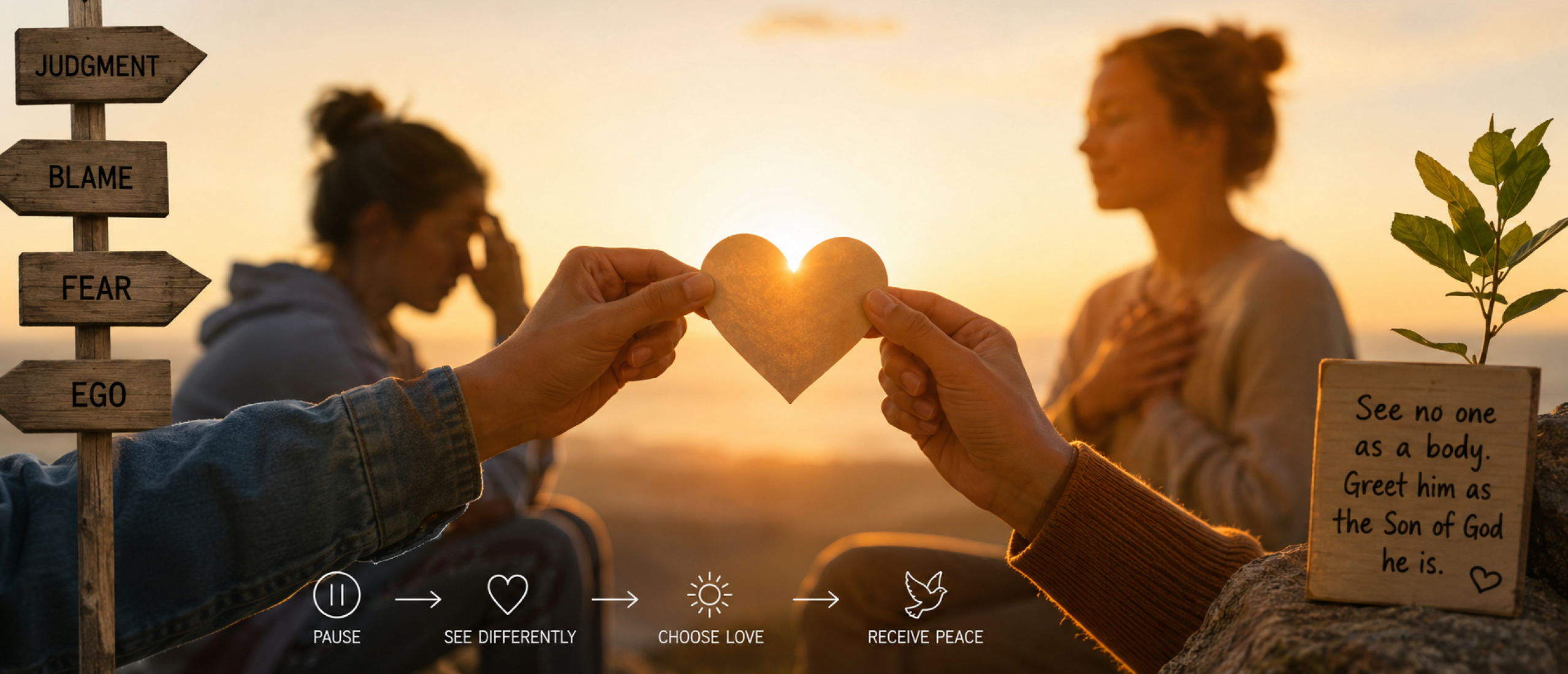
“See no one as a body. Greet him as the Son of God he is.”
This may sound lofty, but it is precisely in everyday situations that this lesson comes alive.
What Have We Actually Received?
According to the lesson, we have already received the truth that we are spirit, created in love, free of guilt, and never truly separated from our Source. This truth does not need to be acquired; it is already within us. What we are learning is how to recognize that same truth in others.
When we see someone through the eyes of love rather than judgment, we give what we ourselves have received. And remarkably, as we extend that vision, we begin to experience it for ourselves. Every encounter becomes an opportunity to recognize the light in another and receive peace in return.
Practical Example 1: The Unfriendly Co-worker
A colleague responds sharply during a meeting. Instantly, irritation arises and you think, “He is so arrogant.”
The usual reaction is to focus on the behavior. Lesson 158 invites a different question:
What if this behavior is not his true identity?
You do not have to approve of the behavior. You do not even have to agree with it. But you can acknowledge that beneath the frustration there may be fear, insecurity, or stress.
By refusing to define him solely by his behavior, you create inner space for understanding. At the same time, you free yourself from the burden of judgment.
You give understanding and receive peace.
Practical Example 2: Conflict Within the Family
Your partner or child says something hurtful. The ego immediately wants to prove that you are right.
The vision of Christ does not ask, “Who is right?”
It asks:
“Can I look beyond these words and see the person who is asking for love?”
Perhaps you choose to pause before responding. Perhaps you truly listen to what lies beneath the words.
Very often, the atmosphere changes the moment one person refuses to fuel the conflict.
This does not mean abandoning healthy boundaries. It means valuing love more than winning.
Practical Example 3: Someone in Traffic
Another driver cuts you off.
Within seconds, thoughts arise:
- What an idiot.
- People do not know how to drive.
- This always happens.
Lesson 158 offers a simple practice:
“This person, just like me, is seeking peace.”
Nothing more is required.
You may notice that the tension dissolves more quickly. The event loses its emotional charge.
You gave forgiveness and received calm.
Practical Example 4: Relating to Yourself
Perhaps the most challenging application of this lesson is not how we see others, but how we see ourselves.
You make a mistake.
The ego says:
- I should have known better.
- I failed.
- I am not good enough.
The vision of Christ sees differently. It sees an error, but not a guilty identity. It sees someone who is learning.
When you treat yourself with the same kindness you would offer a dear friend, you are practicing exactly what this lesson teaches.
You are giving yourself the vision you wish to extend to others.
Practical Example 5: Social Media
Online, people are often reduced to opinions.
Someone posts a message with which you strongly disagree.
Normally, all you see is the viewpoint.
The lesson invites you to look beyond the profile, beyond the words, and beyond the opinion, and see a human being.
A person who seeks meaning, safety, love, and recognition.
You do not have to adopt their opinion. But neither do you have to condemn them.
That small shift changes the quality of your own experience.
A Daily Practice
A practical application of Lesson 158 can be reduced to three simple steps:
1. Pause Whenever You Notice Judgment
Become aware of the judgment without judging yourself for having it.
2. Remind Yourself:
“There is more to this person than what I am seeing right now.”
3. Choose a Different Vision
Ask yourself:
“What if I were willing to see the light in this person?”
Even a moment of willingness can be enough.
Final Reflection
Lesson 158 does not teach us to become blind to mistakes. It teaches that mistakes do not define the truth of who anyone is. Behind every behavior, every role, and every conflict lies the same innocent reality. As we learn to recognize that reality in others, we begin to experience it within ourselves.
Every encounter therefore becomes a choice:
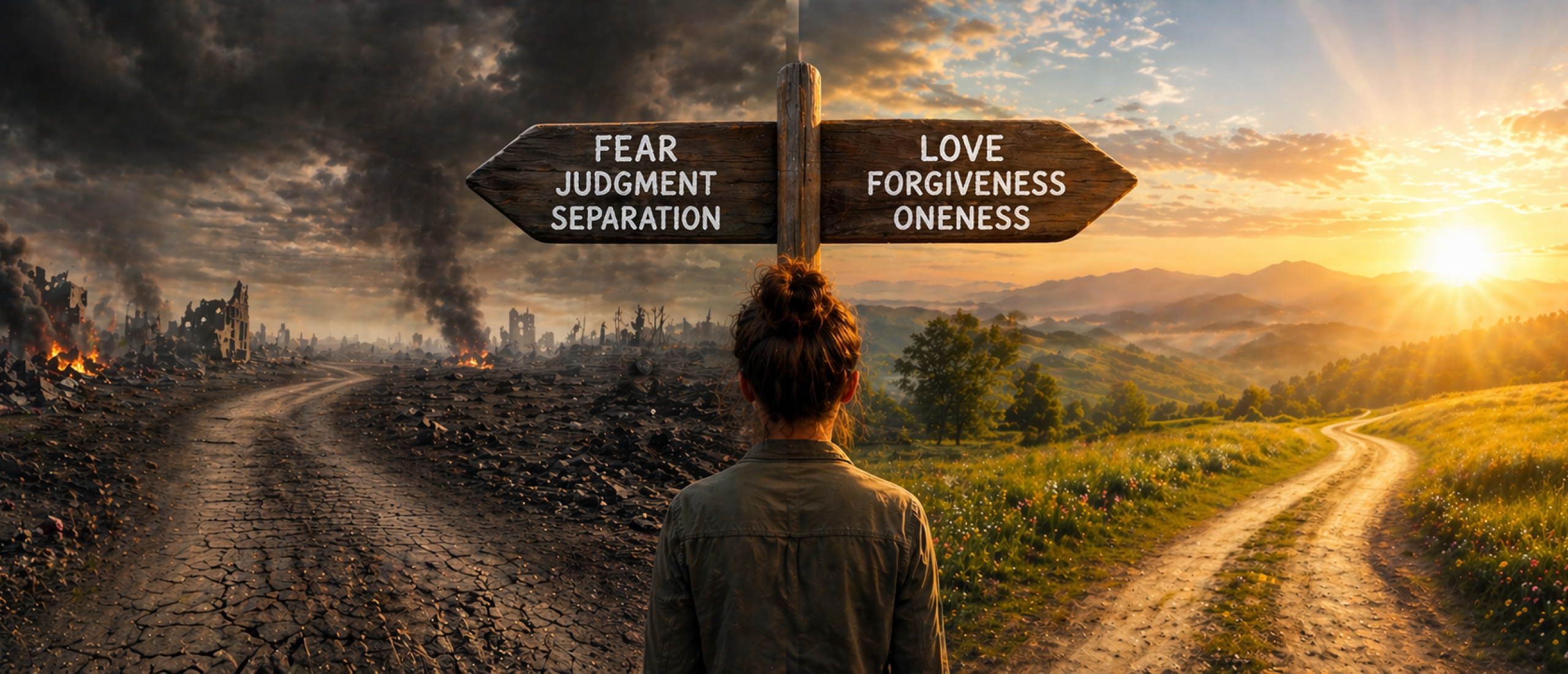
Will I look through the eyes of judgment, or through the eyes of love?
According to Lesson 158, the answer to that question is not only a gift to the other person—it is a gift to yourself as well.